
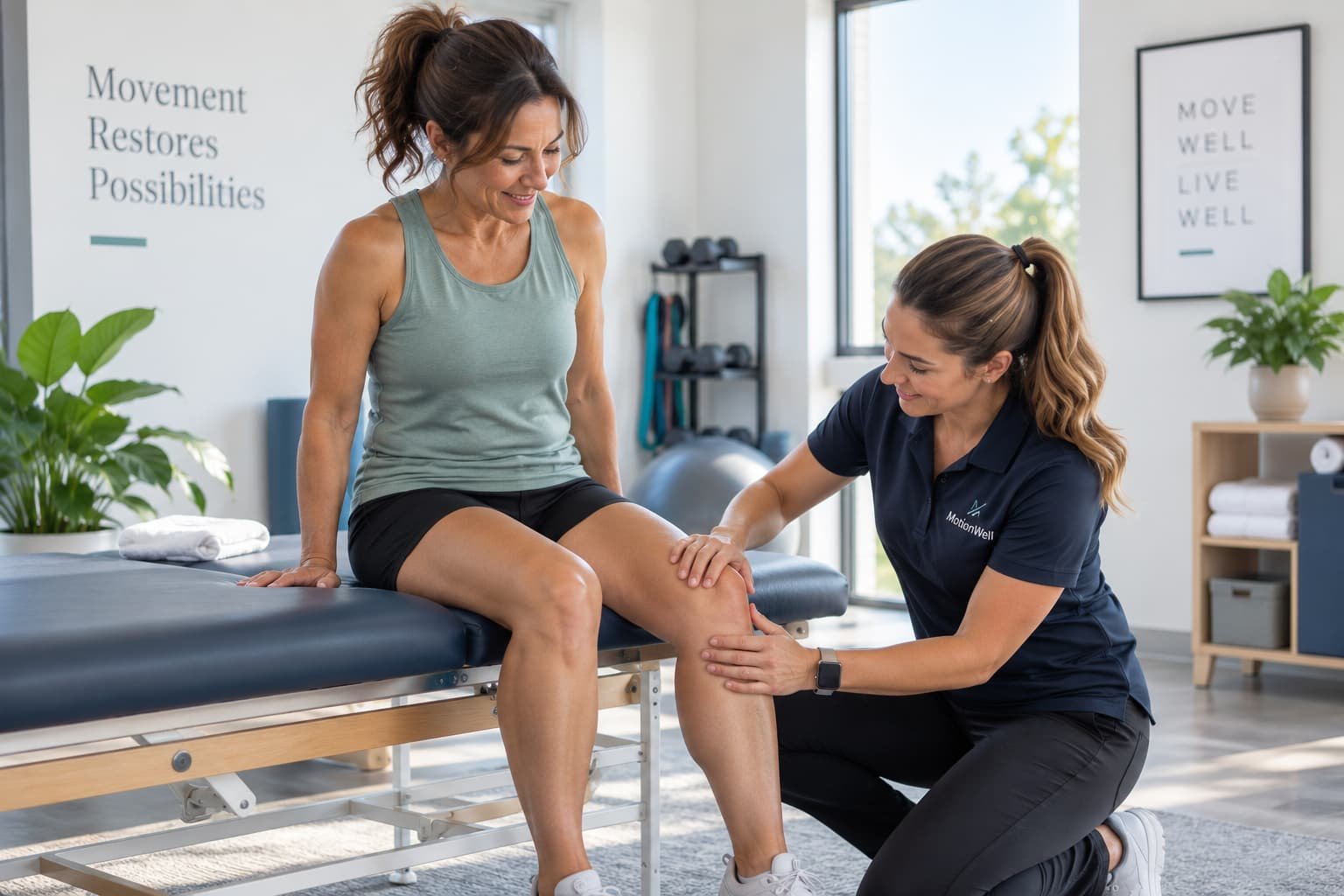
How to Manage Knee Pain Without Surgery
Knee pain can make everyday activities — walking, climbing stairs, exercising, or even getting up from a chair — feel more difficult than they should. And when your knee starts hurting, it’s easy to assume that avoiding activity is the safest option.
But depending on the cause of your symptoms, movement and strengthening may be an important part of managing knee pain and improving function.
1. Keep Moving Within Your Comfort Level
When your knee hurts, completely avoiding movement can be tempting. While some conditions may require temporary activity modifications, staying appropriately active can help maintain mobility and strength.
Low-impact activities such as walking, cycling, or swimming may be more comfortable than higher-impact exercise. The right amount and type of activity will depend on your symptoms and individual needs.
2. Strengthen the Muscles Around Your Knee
Your knee doesn’t work alone. The muscles surrounding your hips, thighs, and lower legs all contribute to how forces are distributed through the joint.
Exercises that strengthen the quadriceps, hamstrings, glutes, and calves can help support everyday movements such as walking, standing, and climbing stairs.
3. Work on Mobility
Limited mobility in the hips, knees, or ankles can affect how you move. Gentle mobility exercises can help maintain comfortable movement and make everyday activities easier.
The goal isn’t to force your knee into uncomfortable positions. Instead, work within a comfortable range and gradually progress as your mobility improves.
4. Modify Activities When Needed
Managing knee pain doesn’t necessarily mean giving up the activities you enjoy. Sometimes small changes can make an activity more manageable while your knee recovers.
That might mean temporarily reducing running mileage, choosing a flatter walking route, adjusting the depth of a squat, or alternating higher-impact activities with lower-impact options.
5. Know When to Get Help
Occasional soreness can happen after exercise or unfamiliar activity. But pain that persists, becomes progressively worse, causes significant swelling, follows an injury, or makes it difficult to bear weight should be evaluated.
A physical therapist can assess how your knee moves, look at strength and mobility throughout your lower body, and help determine an appropriate plan for returning to your normal activities.
Can Physical Therapy Help With Knee Pain?
Physical therapy may be one part of conservative treatment for many causes of knee pain. Your treatment plan will depend on what’s contributing to your symptoms and what you want to get back to doing.
At MotionWell, we focus on helping you improve movement, build strength, and develop a plan that supports your individual goals.
Ready to Get Back to Moving?
Don’t let knee pain keep you from the activities that matter to you. Our physical therapists can help you understand your symptoms and develop a personalized plan to help you move with greater confidence.